Wednesday, September 30, 2009

Omaha HKC Kettlebell Instructor Certification Course with Jon Engum and Mark Cheng: 11/14/2009


Omaha Hardstyle Kettlebell Certification™ (HKC™)
Pavel Tsatsouline's and Dragon Door's new, one-day, entry-level kettlebell instructor certification workshop will be in Omaha on November 14th!


Enter the lucrative world of the certified kettlebell trainer—and attract more clients for a better income!
Enroll Now!

How to master the essentials of kettlebell lifting—and dramatically boost your power and effectiveness as a personal trainer or coach


Learn from the best!
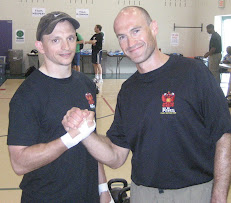
Senior RKC instructor Jon Engum and RKC Team Leader Dr. Mark Cheng will show you how to teach the most fundamental kettlebell techniques.

Saturday, November 14th, 2009
8:30am—6:00pm
Ray and Joan Kroc Center
2825 Y Street, Omaha, NE 68107
Enroll Now!


Cost: $500.00
On successful completion of the HKC, an HKC graduate may deduct their entire HKC tuition fee from a registration for a future RKC certification workshop, within one year of achieving the HKC.
Enroll Now!


Since Pavel and Dragon Door launched the world's first-ever kettlebell instructor certification program in 2001, the classic RKC program has become the gold standard, now with over 1,200 certified instructors in over 43 countries.
The prized RKC certificate represents a "Black Belt" in kettlebell instruction that requires extensive pre-training to attain. A grueling, "experience of a lifetime", the RKC program is the ONLY current program which insists on stringent testing of multiple skills and strengths. Currently only an average of 70% of RKC candidates succeed in passing the requirements by which they can proudly hold themselves forth as "RKC-certified".
Enroll Now!

While qualified RKCs continue to graduate to ever-higher levels of expertise, through such groundbreaking graduate programs such as the CK-FMS and the RKC level II, it's clear that these individuals share a very special combination of drive, passion, skill, commitment and physical capability—without which the RKC would remain a distant dream.

In other words the RKC is not for everyone! Not everyone is ready to step up to that level of intensity and commitment. To pay that kind of price in blood, sweat, tears and money—whatever the final prize and future benefits, be it enhanced financial opportunity or dramatic physical gains.

But what about all of those otherwise-dedicated coaches, trainers and athletes who just can't commit to the full-bore RKC, but would still like to be certified in the most important essentials of kettlebell lifting?

Currently there is no entry-level kettlebell certification program that addresses these folk with the kind of quality and standards Dragon Door and Pavel have become famous for.

Time to change all that and provide this larger group of fine individuals the chance to "Enter the Kettlebell", as it were—and learn from the very best in the business.


So with that in mind, we present you the HardStyle Kettlebell Certification, the HKC—and your chance to join forces with the world's premier kettlebell instructor training system.


And as with everything from Pavel and Dragon Door, the HKC was put together with great thought and care. Pavel and John personally polled the RKC Masters and Seniors, soliciting their informed feedback, before finally settling on the exact HKC program.

In creating the HKC, Pavel drew on his eight-plus years of developing the current Level I and Level II RKC programs, his authoring of the widely acclaimed Enter the Kettlebell!system and other kettlebell training resources, plus thousand of hours of personal discussion and research with high-level training experts of all kinds.
With his deep skill at identifying what is truly essential for effective kettlebell training, Pavel has created, with the HKC, an opportunity to build a superb and rock-solid foundation as a kettlebell professional.

Like the RKC, the HKC includes a qualifying test of physical strength. The RKC is famous for its mandatory snatch test—that immediately sets a high bar for those wishing to qualify as an RKC. We take pride in this. Many fitness certifications have no physical test whatsoever, allowing that curious anomaly of an obviously out-of-shape trainer dispensing advice to clients who are clearly fitter than they are!

To ensure that those who register for the HKC have a reasonable level of fitness, Pavel settled on a Marines marker: the Marines entry-level pullup test. See Details Here


Enroll Now!
Attend the HKC and leave with these major advantages:


  • A deep understanding of the true benefits of kettlebell training—for both yourself and your clients
  • A solid knowledge of vital kettlebell training safety procedures
  • A workmanlike grasp of the fundamentals of biomechanics—to ensure your clients move with perfect form and avoid injury
  • A grasp of the key HardStyle skills and principles of strength
  • The ability to competently perform the three key kettlebell exercises (the Swing, the Get-Up, and the Goblet Squat)
  • A "simple and sinister" set of extra exercises that are easy to learn, easy to teach and a great bonus for both you and your clients
  • The confidence you can now correctly teach the three essential kettlebell exercises—and troubleshoot common technique problems
  • The ability to write kettlebell training programs for athletes (GPP) and fitness clients in a private or class setting
Enroll Now! And discover all this and more in the course of your HKC training:


  • Understand why mastery of the kettlebell swing is fundamental to high-level HardStyle practice
  • How to develop power through compensatory acceleration and overspeed eccentrics
  • How to train hip extension for back and knee health and athletic performance
  • How to employ bracing and neutral spine—for injury prevention, enhanced performance and optimal transmission of force
  • How to recruit the lat as a "core muscle" to improve the spine safety and glute strength
  • How to employ the plank as an effective assessment tool and a corrective drill
  • How to increase power with the biomechanical breathing match
  • A safe, effective modality for developing different types of endurance
  • Explosive training techniques for more effective fat-loss
  • The two-arm swing and corrective exercises
  • The concept of rooting and two key drills for developing it
  • The manual overspeed eccentric swing
  • The one-arm swing
  • The hand-to-hand swing
  • Russian relaxation exercises to enhance the acquisition of skilful movement

  • The two hundred year history of the get-up
  • The get-up as an assessment tool
  • The strength and health benefits of the get-up
  • How to correctly perform the get-up and teach corrective drills
  • How to move from mobility to stability, then from stability to strength—and why this progression is crucial for truly effective kettlebell work
  • The get-up, shoulder mobility and stability exercises. The role of the lat in shoulder stability and strength—and advanced lat facilitation techniques
  • How to employ and teach steering strength
  • The concepts of leakage and linkage—and their importance for effective kettlebell lifting
    Enroll Now!

  • How to perform the goblet squat and corrective drills
  • "Strength stretching" for the hips
  • How to quickly teach professional technique in the barbell squat and deadlift with a special kettlebell exercise
  • How to overcome gluteal amnesia
  • How to most effectively stretch the hip flexors to dramatically improve athletic performance

  • Seven effective and easy-to-learn extra kettlebell exercises—to add variety and depth to your clients' kettlebell workouts

  • Understand the key components of general physical preparation versus special physical preparation
  • How to train athletes versus training the general population
  • Special considerations for training military and law enforcement personnel
  • Personal training versus class training
  • The essentials of effective kettlebell program design
As with the RKC, the HKC will be earned through diligent testing of each candidate. Besides having to pass the requisite pullup test at the outset of the workshop, each HKC candidate will be evaluated for technical proficiency at the end of the workshop and will then be granted either a pass or fail.

Enroll Now!


Omaha HKC Flier
(Click the image below to load a larger version suitable for print)


Friday, September 25, 2009

Press from the Lat

Using your lats to improve your press

One technique for improving the press is the concept of pre-tensing the lat before the press and holding the contraction throughout the pressing movement. Think of your lat as the foundation that your shoulder sits on during the press. While you press the kettlebell overhead contract your lat and push the shoulder down into the socket and onto the shelf created by your tensed lat. Instead of the lat performing the press, the tensed lat serves as a solid base from which to your shoulder can brace against resulting in stronger press. Additionally, using the lat throughout both the eccentric and concentric phase of the press will develop greater pulling power. Many RKCs have improved their pullups by only training the press in this manner. In fact several RKCs have built up to a strict one arm chin-up by learning to use the lat during the press.

If you're a fan of Bruce Lee movies you'll remember seeing Bruce flexing his lats and what looks like a cobra's hood will just out from his sides. For most people, flexing their lats is a very foreign concept that is easier said than done, but it is a skill that can be learned.

To fire the lat:

Drill 1
Shut your armpit tightly as if you are holding a magazine under your arm
Push your armpit down toward your hip.
Keep pushing the armpit downward and maintain a high level of muscular tension.

Imagine you are trying to crush the magazine to pulp. You should feel like the muscles surrounding your armpit are getting thick. If you maintain this effort, in a few moments you should begin to notice a cramping sensation behind the armpit, the muscle that is cramping up right now is your lat. Now use your other arm to reach across the front of your stomach and feel the muscles on the back of your ribs on the working side. As you compress you armpit and press down you should feel the lat harden and thicken... congratulations you are now compressing your lat.

Drill 2
If you are still having difficulty try a loaded clean with a kettlebell that is too heavy for you to press. Clean a heavy kettlebell, feel the weight and let it push your shoulder, elbow and armpit downward. Push the armpit downward and pinch it shut. Now slowly build up tension as if you are trying to initiate a press. Hold this tension for 5-10 seconds. After performing this exercise students in my class commonly set the kettlebell down and point to their lat and ask me if it's supposed to hurt there. Their lat was firing so intensely it started to cramp.

Drill 3
Walking with a kettlebell in the overhead lockout.
Grab a heavy kettlebell, press it overhead and lockout.
Compress your elbow joint, compress the shoulder down & back into the socket.
Keep pulling the shoulder down while maintaining the overhead lockout. Walk. Keep walking. Walk some more. Just keep on walking until you feel you lat cramp.

Applying the Drills
Once you've performed a drill and experienced what it feels like to have your lat contract, you need to immediately perform a one arm press and duplicate the sensation of the lat contracting before and throughout the press. To incorporate this technique into your press: clean the kettlebell, clamp the armpit shut and push the elbow down toward the hip. Throughout the press continue to push the shoulder and armpit downward (contracting your lat). Maintain this downward effort during the negative portion of the press as well pulling the kettlebell downward in low-gear with high tension. The sensation is almost identical to performing a one arm chin-up.

Even with these various drills, firing the lat can still be a frustrating experience, I know it was for me. For nearly a year I diligently worked on my one arm presses telling myself to press from the lat. I thought I was using my lat, I really did. Then one day when I finally started performing press ladders with the 36kg kettlebell (79lbs.) my lat turned on all by itself. It was a revelation. I concluded that the reason my lat had not been firing until now was for two reasons: 1) I didn't know how to contract my lat during the press
2) My lat was not needed to perform presses with light kettlebells. Until the 36kg, I was able to cheat or complete the press without recruiting help from my lats.

So, my last tip is press heavy and press often.

Strength is a skill.

Wednesday, September 9, 2009

You're Not Tense Enough

One of the several tests for becoming an RKC Level 2 instructor is for men to press a kettlebell that is closest in size to 1/2 bodyweight. Now, just pressing it isn't enough... you have to be able to press it a certain way, the RKC way, which almost always mean, the hard way. After cleaning the kettlebell to the chest I must lock my knees, pause until motionless, tighten up, and press the kettlebell over head without any backward lean, jerking, bending my knees or lifting my heels. All in attendance must be in agreement that the technique I performed was indeed a one arm press and not side press.

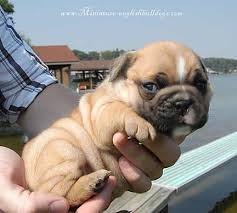
The BulldogA Bulldog
For me my 1/2 bodyweight one arm press is with the 88lb or 40kg kettlebell known as the "Bulldog". Personally, I think pressing an actual bulldog would be a heck of a lot easier.

Currently I can press the 88lb kettlebell strictly, but only on a really good day and it takes me about a 5-10 seconds of all out battle to sloooowly grind that thing to a lock-out.

One of the things I've learned through the RKC and the work of Pavel Tsatsouline is that tension IS strength. In othewords to have a better press I need to generate as much tension in my body as possible before pressing the kettlebell then maintain this tension throughout the movement.

One of the RKC techniques for practicing tension is the bottoms-up clean and press. In the bottoms-up clean you clean the kettlebell to your chest but you crush the handle and lock the kettlebell in the bottoms-up position so the handle is on the bottom and the ball is balanced on top. The bottoms-up clean requires more than just a strong grip, it requires total body tension from your toes to your quads to your glutes, abs, lats and foreams. Similarly these are the same muscles that must tense for a sucessful heavy one arm press.

So to work on my ability to build and maintain tension I've been practicing the bottoms-up clean and press one day a week. During yesterday's practice I experimented with something a little more fun. I practiced high volume (100 rep) presses with the 24kg/53lb kettlebell and to make it more interesting I held another in the bottoms-up rack position with my non-pressing hand. This forced me to build and maintain even more tension throughout my body as I pressed the 24kg kettlebell. I really liked the way it felt. I did not perform all of my presses in this fashion, instead I compared and contrasted with and without the bottoms-up clean. The difference was noticeable. When performing the last few reps of a 2,3,5 rung ladder the added tension from the bottoms-up clean allowed my press to move up smooth with steady effort. The feeling was much more effortless than normal. The added tension creates a more stable based to press from.

Did you Know?

Head strength coaches for Cincinnati Bengals and Washington Redskins have taken and passed the RKC.

World Power Lifting Champion Donnie Thompson is an RKC.

World renown physical therapist and creator of the Function Movement Screen, Gray Cook is an RKC.

Strength and Conditioning Coach for the Danish Olympic Team, Kenneth Jay is a Master RKC.

Olympic Silver Medalist, Mark O'Madsen is an RKC.

World Famous Strength Coach Dan John is an RKC.

RKC Quotes

"Kettlebell training will make you a better man.. even if you're a woman. If you don't know how, I'll show you. If you don't want to, I'll make you! " - Pavel Tsatsouline
"The Swings WILL continue until morale improves!" - Banner hanging at Lone Star Kettlebell in Lubbock TX.
"Anyone can swing a Kettlebell, but not everyone knows how to do the Kettlebell swing." - Master RKC Brett Jones
"Strength is a skill, so is endurance, so is flexibility!" - Pavel Tsatsouline

Scott Stevens, RKC & Pavel Tsatouline